The meaning of a pilgrimage unfolds in stages. The actual journey is just one of several components, embedded in preparatory and home-coming phases.
A pilgrimage begins with an idea (‘Maybe we should do that sometime?’) which only becomes reality if the vision is caught and the decision is made, to ‘Let’s do this!’. Then come the planning, training and preparation until one day the pilgrim dons a (preferably) light pack and leaves to travel to the destination and return. This step is taken with hope and faith that despite obstacles, the pilgrim will be brought safely back home. Then, after completing the physical journey, the pilgrimage continues over weeks, and even years afterward, as the significance of the experience impacts the person’s spirit and soul.
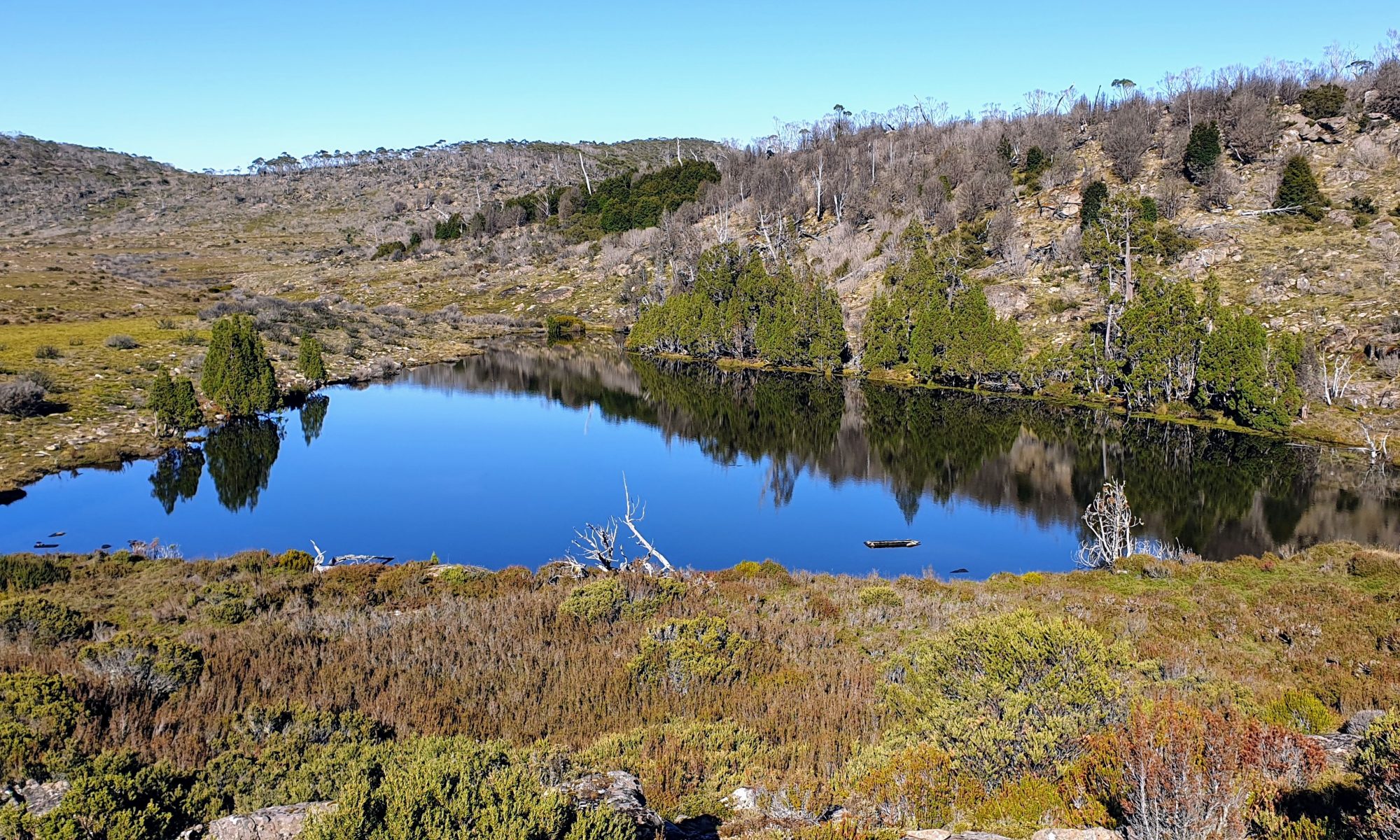
Tim and I made our decision while being attacked by an army of mosquitoes on the edge of Lake Steers in September 2017. We planned our pilgrimage to be a 6-week journey finishing in January 2019. This was not to be, as it took a dramatic turn when Tim had a cardiac arrest at the end of the second day. However, we had been captured by the call. We started to dream of continuing as Tim was recovering from cardiac surgery. That initial decision had to be remade several times over the year. We headed back on the road in February, then paused for several months while Tim awaited further surgery. Once we were informed that his second procedure had been successful we were able to continue once again and with great joy. We are profoundly grateful to have been able to continue the pilgrimage albeit in a very different form, and finish it at the end of 2019.
It is now four months since we arrived at Cockle Creek having concluded a 520-kilometre journey from Bass Strait to the Southern Ocean. From the vantage point of the COVID-19 pandemic and our present self-isolation, the challenges we faced then, of finding the way despite bridges down, fallen trees and overgrown tracks, seem quite insignificant. In fact, it seems like we walked through another world in which the greatest difficulty we faced was plodding through seemingly endless stretches of mud, day after day.
Prior to walking the Via Francigena, in 2011, we grasped the concept that a pilgrimage is a parable of life. The journey we describe here is rather more complex, as our 34 days on the road were interspersed with significant illness and recovery, as well as our normal work and family life. Our present reflections are informed by the direct and indirect consequences of this pandemic. We treasure these memories as we grieve for our world at this time. And we yearn to return. We keep listening for another call to become pilgrims again.