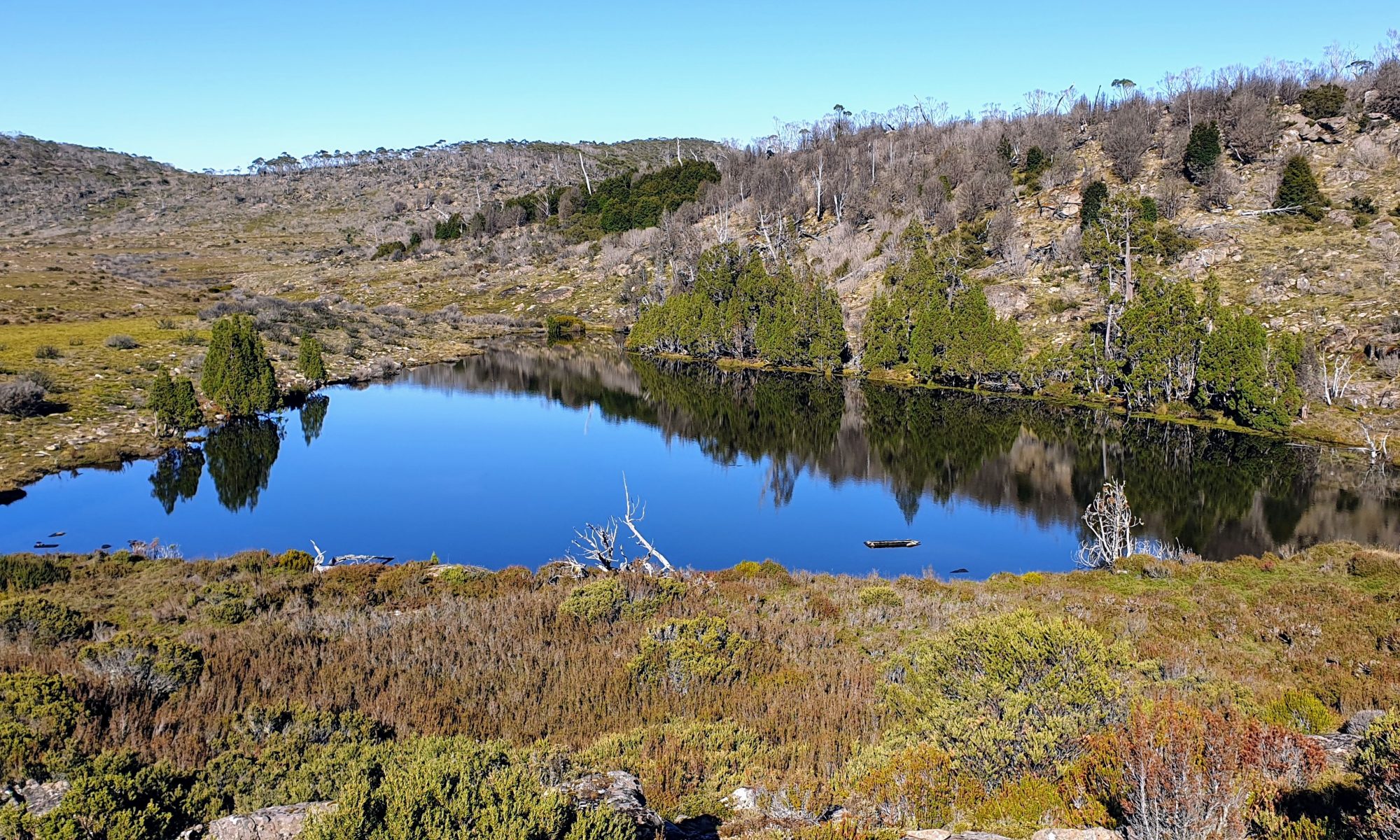
I have written this piece to process the events of last weekend and what lies ahead – Merran – 1 December 2018
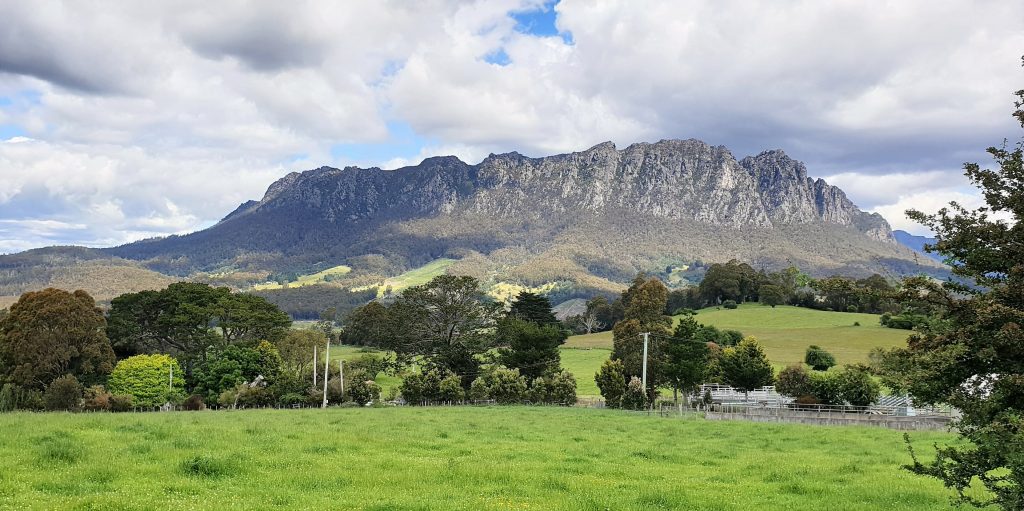
We felt rather than saw or heard them coming. The intense pounding of their wings as they rose ever so slightly over the mallee gums on the river verges then silence as they glided down and along the Murray itself, making a straight path over a meandering one.
My first position as a doctor, an intern at a rural hospital, and death had visited me four times in two days. I remember it so well now, more than thirty years later, and the gift of those pelicans soothing my soul and somehow speaking peace. There had been the morning in casualty when a 44-year-old tree-lopper was brought in by ambulance, electrocuted, and a 24-year-old motorcyclist whose body had been broken by a sudden impact. The 64-year-old man who had suffered a heart attack. And while grieving the pain of those losses the call came to children’s ward after midnight where a 4-year-old girl with diphtheria had had a cardiac arrest. Four failed resuscitations, four people gone, countless people impacted.
I had been caring for a beautiful 84-year-old woman for six weeks after she had had a stroke. She was about to be discharged to the rehabilitation unit, but suddenly deteriorated and she was the fifth, making a handful of losses in so many days. I rang the consultant physician and asked for an evening off. ‘I’m struggling with something’, was all I could come up with. He later said he thought I had just discovered I was pregnant. He gave me leave and my young husband, Tim, and I drove to a favourite spot on a bank of the Murray River. We set up our tent and cooked over the coals of a campfire and watched the river flow by and saw the sky darken and felt the pelicans pass and slept and waked and next day I returned to work and asked my boss how he handled the pain of all those deaths over many years and I cared for my patients that day and the next and the next and so on.
* * *
Birds have been a symbol of hope to us ever since. Pelicans and eagles especially. We would see a pair of eagles and say, hey, that is the two of us. Four pelicans over Tim’s parents’ shack promised us our children were safe. I remember feeling most apprehensive as I headed to the written component of my General Practice Fellowship exam after juggling work, study, and family for several months when a sea eagle perched on a high branch above the road assured me I would be fine. On relating the story to people of faith one responded that God cares for the sparrows too, and two weeks later, at the Royal Children’s Hospital for the oral exam component, sparrows were fluttering around inside the foyer.
My work as a GP and Tim’s work in conflict and recovery consultancy has meant that we have both journeyed with many people through painful, traumatic, even horrific experiences. Recognising that this comes at a cost to our well-being we have been committed to self-care strategies, and one of these has been to take considerable leave or change of pace every seven years. A sabbatical. It has taken various forms throughout the years. We lived in a prayer community as a family for three months, my husband worked for Parks and Wildlife for a year, and our fourteen-year-old daughter joined us on a 40-day pilgrimage from Milan to Rome on foot.
Tim has been aware that his work involving systemic recovery from abuse has a limited time-frame and he desired to step out of this work before it impacted his health. We, therefore, have been planning his transition out of the more disturbing aspects of his work to concentrate on proactive teaching, training, and mentoring. What better way than to go on a long walk through our place, and symbolically tramp the pain out? What fun we had in anticipation and preparation! Searching for the latest in ultralight gear and delighting in 495 g folding chairs, a 700g down-filled double quilt, even a titanium trowel. Dehydrating our food and perfecting dehydrated eggs. 50 g sachets contain 4 eggs. Just add milk powder, dried herbs and water, season, and voila! The most delicious scrambled eggs you could imagine. Last year we did a course in Expedition Medicine feeling most chuffed with our adventurous plan to traverse Tasmania on foot, only to hear about the significantly more serious journeys others had done and were planning (like a 70-day crossing of Antarctica on a previously unknown route), and realising our trip was only a bit of a walk in the park.
Physical fitness was our top priority and to our grown-up kids, it was rather a joke to see Mum and Dad set up a home gym, and rather fun to watch Mum’s progress at Railton Parkrun. (A deliberate plug here. Railton Parkrun is awesome!) Tim changed his diet and began his sabbatical leave 2 months before our departure. It was so good to have him home preparing the vegetable garden, making out-door furniture, and heading out for bushwalking trips rather than flying in and out of stressful consultations all the time. While running training courses, he would often have several consultants calling him concurrently for supervision advice and mobilise consultancy teams into new situations as they arose, in between teaching sessions and long into the night. As part of his sabbatical planning, Tim fit 12 months’ work into eight months to take leave. Having turned off his work email and changed to a sabbatical phone, we were delighting in the anticipation and count down for our ‘Island Traverse’.
Tim is the map man and had broken our 500+ km journey into 50 stages of approximately 10 km lengths. We planned to do one, two, or even three each day. Day one was going to involve wading across the Mersey River over some rapids north of Railton, but after several days of reasonably heavy rainfall the water level was up and we reverted to an earlier route plan which crossed the Mersey by the bridge at Latrobe. Flexibility was one of our key concepts. So was being boringly safe. We were not into risk-taking. This was to be a reflective and spiritual journey rather than a trek.
The morning arrived and with great glee, we headed out to our starting point, the first home we shared in Tasmania, right on the waterfront on Bass Strait. Tim and I traveled separately. Our mountain guide oldest son Justin had driven up from Hobart especially to see us off, and we picked up a friend, Jessie, along the way. Tim went with his sister Barbie to drop a car off at our Day 1 destination. When we met in Devonport he grinned.
“There was a wedge-tailed eagle circling over Nook!”
“Only one?”
I felt a little disappointed that a pair of eagles hadn’t been our departure gift.
* * *
We gathered by the edge of Bass Strait, Tim’s parents, Justin, and a couple of other friends. Tim asked us to pray with one of the Pilgrim prayers he had written and we gathered in a circle, a very Celtic way to pray:
Blessing of the way and of pilgrims
Bless the sun that shines
Bless the wind that blows
Bless the rain that falls
Bless the cold that cools
Bless the heat that warms
Bless the clouds that cover
Bless the trees that shade
Bless the mountains that guide
Bless the water that refreshes
Bless the way we walk
Through the world you have made.
Bless our feet with resilience
Bless our legs with endurance
Bless our bodies with sustenance
Bless our hearts with courage
Bless our backs with strength
Bless our minds with wisdom
Bless our eyes with beauty
Bless our ears with silence
Bless our souls with peace
Bless our spirits with your presence
As this day we walk your way.
Tim and I then went down to the waterfront and gathered several stones to carry with us on our pilgrimage. We dipped our fingers into Bass Strait at the beach where our children spent their early days, before aiming to do the same thing a few weeks later in an ocean further south. Farewells – and we had begun. Tim walking with his father, me with Jessie, my walking partner. We left our old home, walked past the children’s first school, the medical centre I worked in for seven years, the butchery where the children would be given frankfurter sausages by the always friendly Mr. Morris. I had tinges of deep gratitude as we walked, and Jessie and I talked, sharing memories and creating new ones. Seeing father and son ahead, deep in conversation, Jessie insisted I took a photo, and I took several trying to capture the moment. Alert for cars as we shared their perceived sole domain, we relaxed when we came upon a walking track and soon came out onto Bells Parade at the end of Stage One.
Sharing coffees on a slightly overcast muggy morning, we joked with our walking buddies and other friends who re-joined us, along with Jessie’s dog Billie just short of her (Billie’s) 20th birthday party. Hearts full we set off again, this time just the two of us, and we were soon in a rhythm of walking that we would maintain over the next couple of days. We commented on how lucky we are that we have similar walking paces and styles. At the Mersey River, we noted the higher water level which reinforced our prior decision to avoid wading across further upstream.
Off the road, we turned onto railway tracks, slipping aside in plenty of time as a coal train passed, the driver oblivious to us. Once past the huge Dulverton tip, a mountain of putrid waste, we decided to delay lunch until we were well beyond the reach of the odours. We turned a corner and found our planned route blocked by a “No Trespassers” sign. Hesitating while Tim’s brain computed possible alternative routes without a very long retracing of our steps, a horse and rider approached along that same road. After a quick chat with the rider, Tim was confident to keep going along our planned route.
Tim had packed a gourmet lunch. After finding the tomatoes had leaked into his pack, and removing the very keen leeches crawling over mine, we sat back in our Helinox chairs on the road itself, listening to James Taylor from the lightweight speaker Tim had brought along for fun. We reveled both in the ‘now’ and in the anticipation of our 42-day journey.
We passed through forestry coups, native forest, and alpaca farms, glad that a lone Maremma dog noticed us only after we had gone by. He stood sentinel to block us from returning, of which we had no intention. Crossing a tiny rivulet Tim reached out his walking pole to guide me over. And we laughed. We danced to James Taylor and felt free and joyous and our packs were light, shoes fitted well on this first day of walking together to the Southern Ocean.
We stopped to chat with an alpaca farmer about the road ahead, and he told us he had not been up that way in years, but he thought it still went through. No wonder, we thought as we turned onto it. The road under the powerlines was like a roller-coaster, up and over and down, each rise steeper and higher than the one before, the track deteriorating with deep rivets, but we kept up our initial pace, feeling optimistic about our capability to fulfill our plans.
Coming up a very steep section, suddenly Tim was on the ground. Had he fallen or fainted? He answered me immediately. A faint. Well, we had been walking consistently, and with a considerable ascent in the last half hour, and close to 25 kilometres already, and he felt fine. After sitting for a few minutes he wanted to go on and so we did. Close to the top, our road vanished under scrub and we had to crawl at times and beat our way up steep terrain through what had forgotten to be a path a long time ago.
“Almost there,” said Tim.
Almost is not there until you make it, I answered to myself, thinking of my daughters’ final days of their university degrees, when almost there was almost didn’t make it – but they did.
And we did too, emerging exultant from our bush bash, covered in dried leaves and sticks. A vista greeted us – hilly ranges to the east beyond the way we had come, and a clear line to Cradle Mountain in our onward direction.
And there was that eagle. Still only one. Circling, just away from us. Not giving any indication of having seen us but, of course, it had. We had completed our first day, we were fit, happy, and well-equipped, so we jaunted down the hill to our car and drove back to our home.
* * *
The forecast for our second day was for perfect walking conditions again. We eagerly ate our scrambled eggs, donned our gear and we were back at yesterday’s endpoint before 8 am. The pathway through the Badgers was both familiar and new due to recent trackwork. Tim suggested we spend the first half-hour walking in silence before we resumed our conversation.
The gift for Tim of Day 2 was the view from the Northern Lookout. (My gift came later and was rather more spectacular.) We beheld from a pilgrim’s perspective the township where Tim was born and raised and to which he returned and raised his family in turn, nestled amongst mountains and farmland. A sacred moment, a pause, then walking again, back onto a more familiar path as we scooted down the hill to the road and we were heading in a straight line for Sheffield. Two phone calls and lovely chats, one with a friend in Hobart who works at the Royal Hobart Hospital – I think we will be seeing her there soon! – and the other our daughter Sophia, keen to share her brilliant university results.
“Now Mum, make sure you take photos of Dad – there are plenty of you!” she challenged me. So I did, and one in particular will remain a pretty special one in the years to come. Thank you, Sophia.
We walked by Barbie’s house and were welcomed in for sparkling mineral water and a chat before joining her at the local coffee shop (Fudge’n’Good Coffee) with friends of hers. It turned out that the two men had a lot in common as they chatted about mutual friends and ministries. That is where I captured that great cheeky grin as Tim prepared to enjoy cherry pie and cream, his favourite.
By 11 am on day 2 we had already four ‘stages’. We were ahead of schedule. We had planned to walk to a hut on the side of Mount Roland after church on Day 3, but we were feeling so good we decided to set out on the next 15 km that afternoon. The only concern we had is that our friend Vera wanted to join us on that leg. As we jumped the fence she was in our back garden helping her son stack wood for us. She was free to come, so we arranged to meet after lunch on our way past her house.
Heading out of town with Vera our hearts and step were light. Now Vera is a physical trainer and masseuse, having worked with pre-Olympic athletes in Russia. She has been my masseuse for many years and assisted us both in our preparation for this trip – emphasising how essential stretches are. We stopped by a huge radiata pine and dutifully stretched, learning a few more techniques from our wonderful friend and feeling the bliss of those stretches as they released tight muscles.
The route we had chosen kept us away from heavy traffic and passed the property of Tim’s predecessors. The pines which they planted are still there. Plenty of photo opportunities.
Our conversation became more reflective as we passed The Vale, a local airstrip, and paused to consider the recent death of a local pilot. “She lived a full life,” Vera mused.
Five years ago, Tim’s younger brother John died of a sudden heart attack in his front garden while preparing to celebrate his 50th birthday. We had planned to stop at his graveside before climbing Mount Roland. What we had not comprehended was how profound it was to be with Vera on this section, as her baby son was also buried there, close to John’s grave.
It was a holy approach to the Claude Road cemetery. We sat and prayed at Alexander’s grave. Tim had taken his funeral in Russian Orthodox style fifteen years earlier. We moved to John’s grave and prayed there. As I had done many times, I reflected on the power of God to uphold each one of John’s family over the years since. The courage each one has had to rebuild a life of meaning during profound grief, to choose to love and hope beyond the devastation of his sudden death, is a tribute to God’s faithfulness and their determined commitment to trust him in all circumstances.
Climbing the final leg to the Hut on Mount Roland, we were feeling great. Fifty kilometres in two days, one day ahead of schedule, we could nail this! We took plenty of rests, more so to be proactive because of Tim’s faint the day rather than feeling that we needed to. In the past, Tim has found hills difficult, often apologising for taking them slowly. But after a six-month training program, Tim was fitter than he had been in years and was cruising up the hills. We stepped aside to let a car pass, but it stopped and out jumped a smiling gorgeous Julia Boersma who hugged us and snapped an epic photo.
The Hut is a special place for us. The first hut was built on Bruce and Helen French’s property by the local Sheffield youth group in the 1970s. Having returned from working as an Agricultural Scientist in Papua New Guinea for several years, the French family moved to Sheffield and opened a drop-in centre/coffee shop for local young people. A warm and friendly atmosphere meant lots of teens would gather on Friday nights to enjoy hanging out together. Afterward, for many months, several of them would drive up to the block on the side of the mountain and spend the next day building a shack. It became a place where those who wanted to rest or reflect or marvel at the majesty of the mountain could come.
It was there that Tim proposed to me, dictating the words for me to write in my journal. I had planned to be a medical missionary, and throughout our relationship, I was struggling to work out how strong that ideal was, and how strong my love for Tim. When Tim proposed, I was about to leave for a medical elective placement at a Christian hospital in Taiwan. He did not want an answer straight away, but he did want me to know how he felt before I left. I returned to Melbourne pondering. The next morning, I awoke trying to work out whether I would let Tim know then, or after returning from Taiwan, that the answer was yes. When I realised that I had made my decision, I got onto the phone (after getting permission from my father to make a long distance call) and blurted out, to a very sleepy Tim, Yes! He rang a couple of hours later to check whether he had been dreaming. He had spent a long day hay bailing, and I had awoken him from an exhausted slumber when I rang him so early. We kept our engagement secret except for our parents, celebrating on my return from Taiwan.
* * *
The original hut burnt down. A couple of months later the beautiful Helen French died of a cardiac arrest. She was driving with Bruce to Launceston. Helen was attended by paramedics who “happened” to be passing that way, but was not able to be resuscitated. Her sudden death devastated many, as she was dearly loved by all who knew her, a woman of gentleness, kind and generous with a deep and profound faith. Tim had the enormous privilege of taking her funeral.
As we climbed the final few metres, Bruce was standing outside to greet us. That afternoon a group had gathered to honour Bruce’s achievement of documenting an astounding 30,000 food plants. His life work has been to assist communities around the world feed themselves with plants indigenous to their area. A humble man, Bruce has been a significant mentor to Tim. Tim still has a 3-page letter from him, written in pencil on foolscap sheets, before Tim began his Arts degree at Melbourne University. His challenge to Tim was to work hard to evaluate everything he learned against the Bible, grappling with new information, and reworking his understanding of his Christian faith at the same time. Bruce’s observation was that many Christians ended their degrees with two separate worldviews, a secular one and a simplistic Christian understanding that had not matured. So often, the naïve one was discarded, or the person lived in two disparate worlds. Tim has continued to build his ongoing commitment to learning on that principle, a foundation that has been there now for over forty years.
As we walked the final ascent, Tim and I locked gaze, my eyes questioning him, ‘How are you going?’
His eyes answered, ‘Yes, I am fine, I’ll get to the top then sit down’.
A few more steps and Tim was shaking Bruce’s hand.
“Congratulations on 30,000 plants, Bruce.”
He was about to introduce Vera then fell. Crumpled. Just like the day before. But this time he was gone.
Bruce and Anthea acted first. Bruce began mouth to mouth while saying, many times over, ‘Stay with us, Tim’. Anthea gave the first compressions of CPR. I knelt beside him, numb, checking for a pulse and wondering whether I would see him again. As the minutes continued, I wondered what sort of damage would be evident even if he did survive. The necessity of the moment prevented too much thinking along those lines. Andrew French took over the compressions. Grant quietly in the background was calling the ambulance, and Vera was telling Tim that his time had not yet come. While we worked to maintain Tim’s life those around us were in deep prayer. I felt numb, yet at peace, knowing that the outcome was ultimately not in our hands.
If you were planning to survive a cardiac arrest, your first choice would not be on the side of a mountain, seven kilometres from a small rural town, on a bluestone track. Yet in retrospect the whole situation appears to have been carefully choreographed. Those present made decisions and had the skills to keep Tim’s brain and body perfused until the ambulance came. The first ambulance arrived six minutes after the call came through. They continued CPR then supplied a successful defibrillation 22 minutes after Tim collapsed. The fire brigade and second ambulance had arrived on the scene within that time-frame. French grandchildren arranged a prayer meeting inside The Hut and others watched and prayed in silence. I was surrounded by love and support. There was a calm determination throughout.
* * *
Tim has no memory, of course, of what happened, after shaking Bruce’s hand. He had no out of body experience or ‘bright lights’ but came to consciousness hearing Bruce’s exhortation, “Stay with us, Tim”, and Vera’s confident assertion, “It is not your time yet Tim!”
Tim was transferred to the LGH via ambulance, and Andrew drove Grant, Vera, and I through to meet him there. When Vera, Barbie, and I were allowed through to the resuscitation cubicle he could muster a smile and talk with us as though nothing had happened, apart from the reminder of very sore ribs and a burn on his chest. Several times he has said that he feels just the same, but to please let him know if he is acting strangely. We haven’t had to tell him yet! 22 minutes on a mountainside with no pulse, and he has no brain or heart damage. The quality of the CPR has become rather legendary at the cardiac unit where Tim is presently residing.
Initial investigations showed an aberrant pattern on his ECG which is diagnostic of a congenital condition called Wolff Parkinson White syndrome. His cardiac enzymes were only slightly elevated, consistent with CPR and defibrillation rather than an ischaemic heart attack. The cardiology team was therefore not expecting to find significant coronary artery disease when they did an angiogram. Tim said silence descended during the procedure as dye filled his heart and showed that all three main arteries to his heart show significant narrowing. He is now booked for open-heart surgery to provide cardiac bypass grafts once a bed and theatre space is available in Hobart. A cardiac ablation in Melbourne in the days or months to follow is also probable.
* * *
Only one eagle.
At the beginning and end of our first day, an eagle soared overhead. Tim collapsed that day, and we didn’t see it as a warning sign. If Tim had gone into cardiac arrest then I would not have been able to keep him alive. Our plan for the day after reaching The Hut was to go up the face of Mount Roland, then into the wilderness together. The potential of what could have happened is thankfully only conjecture, and we do not live with ‘what ifs’, but reality. Our reality is that at our time of need those who were able and willing to assist us were there, and Tim is alive and whole as a result.
How do we face open-heart surgery and its aftermath? As a pilgrimage.
We have walked a couple of pilgrimages before. That equips us a little. We know that they are not super-spiritual experiences. From Milan to Rome, our expectation of long times in prayer and meditation quickly dissolved into a grind of walking, eating, doing laundry, and tending to sore feet over and over again. The key to pilgrimage for us in the past has been an openness to the moment and taking the next step. So that’s what we will be doing now.
This is a very different pilgrimage to the one we had planned and prepared for. It is rather more challenging than we expected. Today we stand ready to step out again, with the loving support of many friends and the best family we could ever hope for at our side. We are with a God who sent an eagle to say, not today. Our feet have been set on a new path and we are ready to walk it.
Merran,
Thanks so much for this beautiful telling
Of the events. We are praying for you all.
With love,
Kevin and Eloise
Sent from my iPhone
Thank you both for journeying with us, Kevin and Eloise, Merran
Merran
Thank for sharing you heart felt journey,
Its so lovely to see god peace that surpasses all understanding
With you both
Love and hugs from Linda & gordon brookes xxx
We value your support x
Thank you Merran. Your story has touched me and you are all on our hearts and prayers.
Such a privilege to read your story, Merran. Praying for You and Tim, and all your family.
Humbled, inspired, deeply thankful in glimpsing God’s grace woven so clearly throughout your journey Merran. Praying God’s peace and grace continue to embrace you and Tim and your family as you walk these next steps in this very different pilgrimage.